Mālama Funding · US business-purpose lender for real estate investors
Loan sizing and property intelligence inside a lending platform
A loan origination platform for investor loans, where we engineered the loan sizer, loan-product configuration and property search that staff use to price and qualify deals.
What we did, plainly
Mālama's platform was built by a larger team. Our co-founder Birehan Anteneh contributed backend engineering between March and August 2025. Items tagged “Our work” below are the parts we engineered. Everything else is shown so you can see the whole system, not because we built it.
- 157
- application screens across staff and borrower portals
- 640+
- API operations in the backend
- 5
- loan strategies modelled
- 4
- background workers for sizing and document AI
These figures describe the whole platform, which was built by a larger team. Our contribution is the backend work tagged “Our work”.
The problem
Investor loans (fix and flip, bridge, rental, new construction) are priced against many variables: the property, the borrower, the loan product and the lender's rules. Teams doing this in spreadsheets and email re-key the same data and answer the same questions slowly.
A lender also has to track the file itself: contacts, documents, checklists, communications and what the borrower has been told.
Why off-the-shelf was not enough
Generic CRMs do not model loan products, pricing assumptions or the property diligence that drives a decision. The platform needed a configurable engine for products and fields, not a fixed form.
What the platform does
The platform gives staff a loan workspace, a borrower portal and a set of background workers. The loan sizer produces loan options from a deal's inputs. Loan products and their fields are configurable, so new products do not need a developer.
Property search with sold comparables and due-diligence data helps staff judge a deal before a term sheet goes out.
How it works
Inside the platform, step by step
01 / Staff dashboard
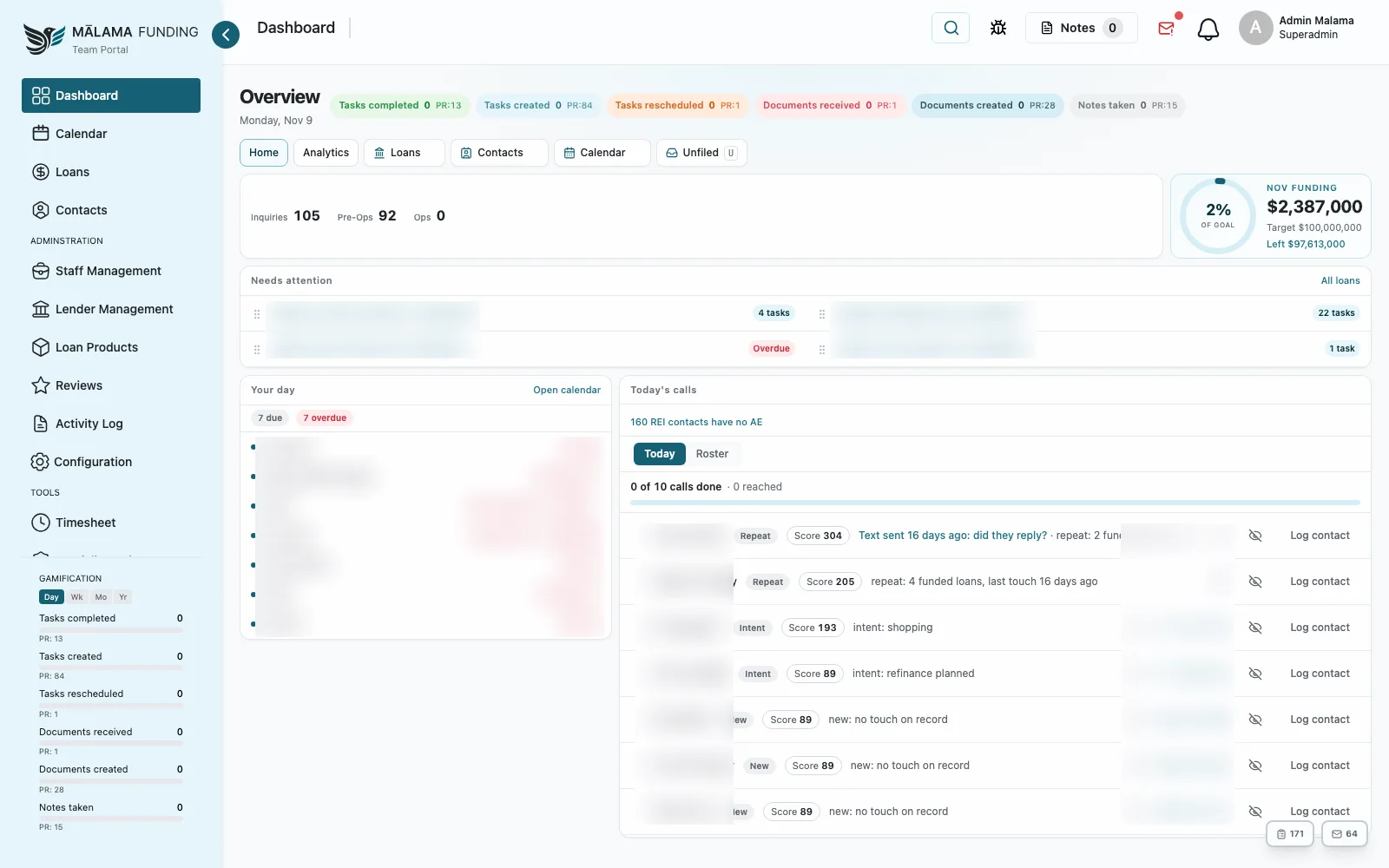
Start the day from what needs attention
Loans needing attention, the day’s tasks and a ranked call list sit on one screen, so staff open the platform and know what to do next. Names in this screenshot are blurred.
LiveMālama Funding02 / Property search
Judge the property before the term sheet
Property search with nearby sold comparables and due-diligence data puts the evidence behind a loan decision next to the file.
LiveOur workMālama Funding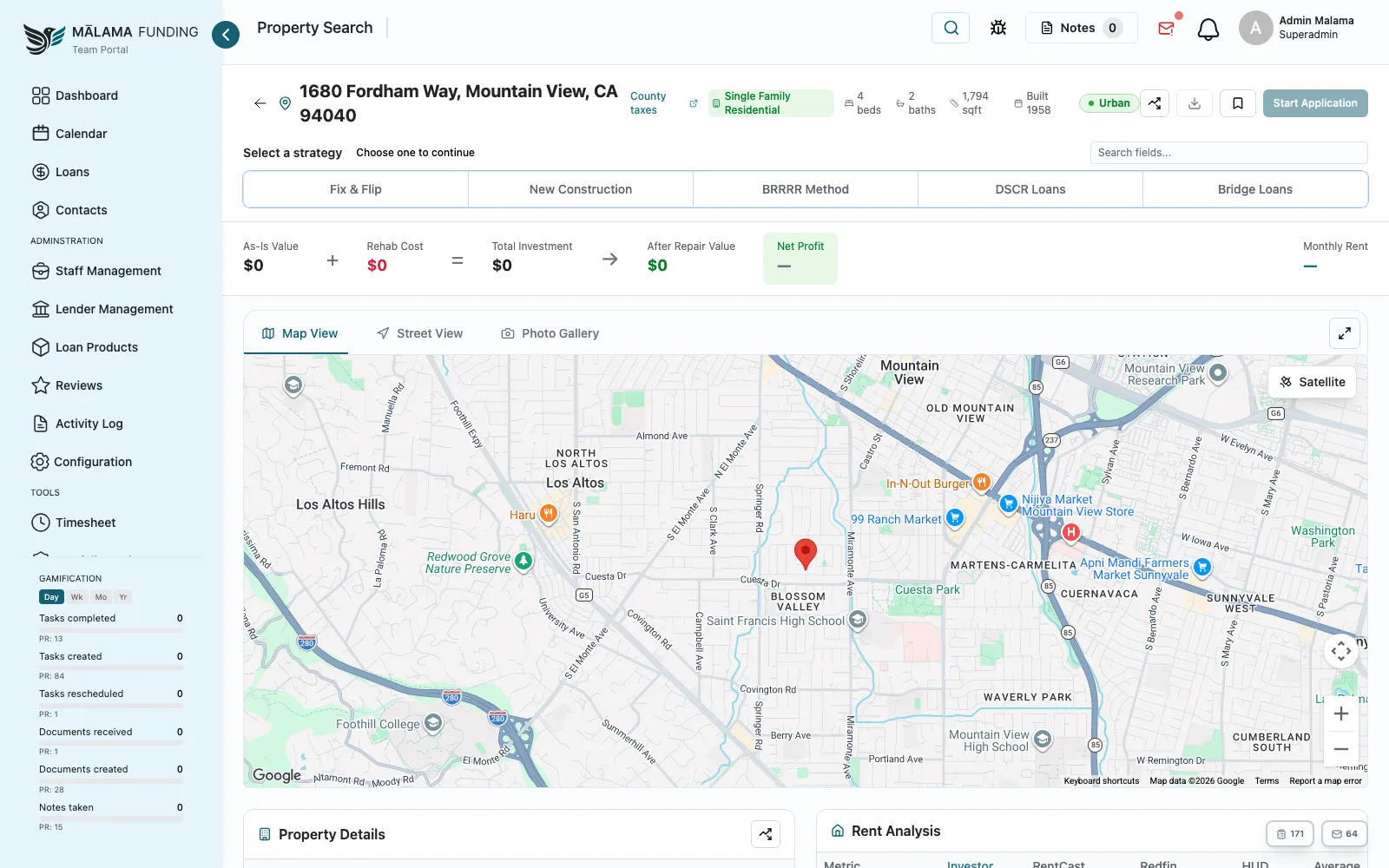
03 / Configurable products
New loan products without a developer
Loan products, their fields and validation rules are data, not code. Dynamic custom fields let staff capture what a product needs.
LiveOur workMālama Funding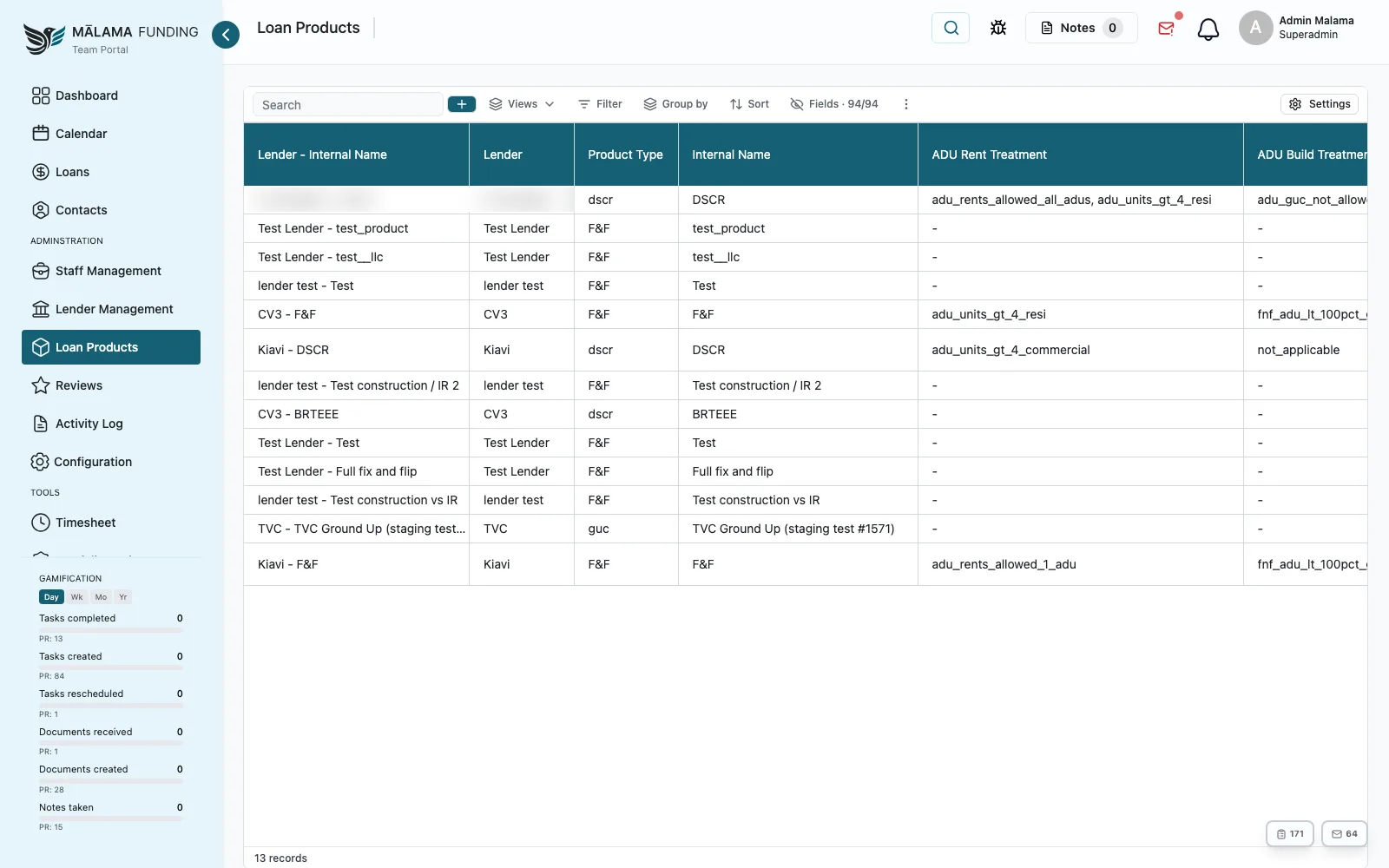
04 / Documents and checks
Every document filed and tracked
New files land in an inbox and are filed against a document type. Requests for documents the borrower still owes sit beside what has arrived. Background workers index documents and run AI checks against checklist items.
LiveMālama Funding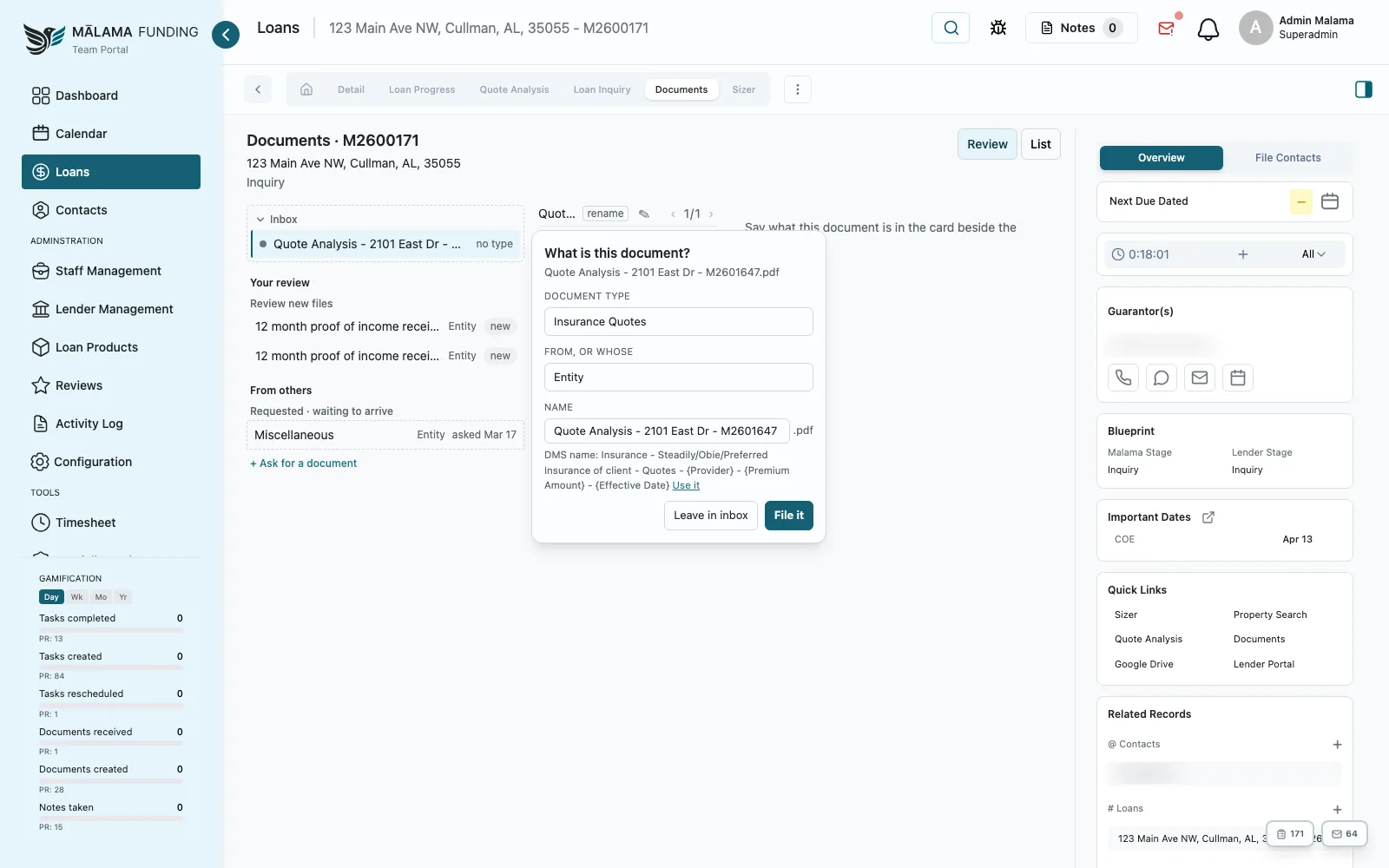
Screens are from an environment populated with test data. No real customer, agent or borrower records are shown.
Capabilities
What exists, and what does not.
The whole platform is listed so you can see what a lender can have. Items marked “Our work” are the parts we engineered.
- Live
- Running in the client's production environment.
- Built
- Implemented in the codebase, but switched off for production users or waiting on configuration.
- Could build
- Not built. Something we could build for you, shown so you can see where the work could go.
Loan sizer and loan options
Inputs to options, with an automatic run on new inquiries.
LiveOur workLoan product configuration and dynamic fields
Products, fields and validation as data.
LiveOur workProperty search, comparables and due diligence
Evidence beside the file.
LiveOur workDocument history and requests
What was asked for and what has arrived.
LiveOur workStaff loan workspace and pipeline
Files by stage with tasks and notes.
LiveCRM contacts, email and messaging templates
Communication tied to the loan.
LiveBorrower portal and term sheet links
Borrower-facing views and shareable term sheets.
LiveAI document indexing and checklist validation
Background workers on Google Cloud Pub/Sub.
LiveConstruction draw management
Not part of the platform. A realistic extension for construction lenders.
Could buildE-signature on loan documents
Not built. Integration with an e-sign provider would be an extension.
Could build
Operational value
What it changes day to day.
Described from how the system works. We do not quote savings or percentages we cannot evidence.
- Pricing logic that lives in the system
- Assumptions and loan products are configured once and reused across every deal, instead of living in a spreadsheet.
- Faster first answers
- Automatic sizing on a new inquiry means staff start from loan options, not a blank form.
- Evidence next to the decision
- Comparables and diligence data sit in the loan workspace rather than in browser tabs.
- Products that change without releases
- Configurable products and fields mean the lender can launch or adjust a product on its own timetable.
Built with
- Next.js and TypeScript
- FastAPI on Python
- PostgreSQL with pgvector
- Google Cloud Run and Pub/Sub workers
- OpenAI models via LlamaIndex
Next
Al-Shalawi Law
Saudi law firm · bilingual legal operations
Pricing and qualifying deals in spreadsheets?
Tell us what your team prices, checks and chases by hand. We will tell you where software or automation would help, and where it would not.